
September 17, 2026
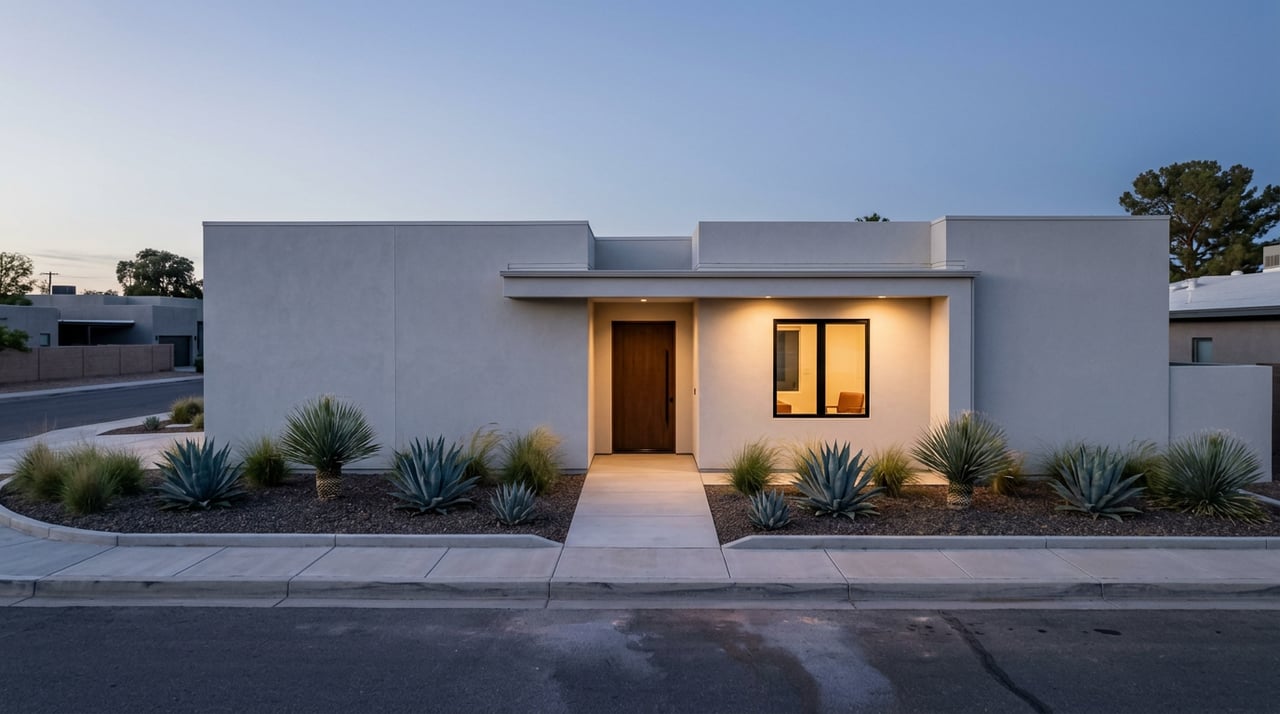
For years, the lot on Park Avenue near Hall Avenue was the kind of space nobody in San Ysidro thought much about. Seven thousand square feet, fenced, empty. The kind of parcel you drive past on the way to somewhere else. On September 3, 2026, that changed. A ribbon was cut, a mass-timber building called La Estancia opened its doors, and the vacant lot became La Semilla Climate Resiliency Center, a project residents helped design from the ground up.
That alone would be a decent local story. What makes it worth a longer look is what happened five weeks earlier, elsewhere in San Ysidro, when a different neighborhood building reopened after a $5.8 million overhaul. Two projects, both aimed squarely at people who already live here, both landing within the same summer. That is not the version of San Ysidro most coverage tells. Most of what gets written about this neighborhood starts and ends at the border crossing or the outlet mall. This is the version that starts at Park Avenue.
La Semilla Climate Resiliency Center is built and operated by Casa Familiar, the longtime San Ysidro nonprofit, with $8.5 million in funding from the California Strategic Growth Council's Community Resilience Centers Program. The campus includes La Estancia as the main building, along with solar panels, an electric vehicle charging station, a community garden, and water cisterns that catch and store rainwater.
The building's job during a heat wave or a power outage is straightforward: it becomes a place to cool down, charge a phone, and gather with neighbors. Outside of emergencies, the programming leans toward green living and drought-tolerant gardening, the kind of practical, hands-on skills that matter in a neighborhood where every square foot of shade counts.
Bertha Ruiz has lived in San Ysidro for nearly 30 years and helped Casa Familiar plan the center. At the ribbon-cutting, she reflected in Spanish on how surprised she'd been to learn just how polluted her own neighborhood was. She said she'd only ever known that her family had breathing problems, not the reason behind them. Lisa Cuestas, CEO of Casa Familiar, put the project's purpose plainly:
"Today's ribbon cutting represents what is possible when residents help shape the future of their community."
That detail matters more than it might first appear. Casa Familiar didn't parachute in with a design and a grand opening. Residents like Ruiz shaped what the space would actually do, which is a different thing from a government agency building an amenity and hoping people find a use for it.
San Ysidro sits next to the San Ysidro Port of Entry, the busiest land border crossing in the world, handling roughly 70,000 northbound vehicles and 20,000 pedestrians on an average day. That much idling traffic next to residential streets has real consequences. According to CalEnviroScreen, the state's environmental health screening tool, San Ysidro ranks in the 100th percentile for traffic-related pollution impacts, higher than anywhere else in California.
That context explains why a cooling center and a shaded garden are not a small addition here. They are a direct answer to a specific, measurable local condition, sited exactly where the need is highest rather than somewhere more convenient to build.
Before La Semilla ever broke ground, a different piece of neighborhood infrastructure quietly got a second life. On July 29, 2026, Mayor Todd Gloria and Representative Juan Vargas joined residents to reopen the Colonel Irving Salomon San Ysidro Community Activity Center after a $5.8 million modernization project. Kids in the neighborhood now have a renovated park and recreation center to use, one that had been showing its age before the upgrade.
Two ribbon-cuttings, five weeks apart, both aimed at people who already call San Ysidro home rather than at visitors passing through. Neither project made a splash outside the South Bay. Neither one needed to. That is often how the most useful neighborhood changes work: not with a headline everyone sees, but with a building that quietly starts doing its job the day it reopens.
If you spend time in San Ysidro's commercial corridor near Las Americas Premium Outlets, you may notice something different this year. More than 200 new parking meters have started appearing across the business district, a response to years of complaints from residents and shop owners about the lack of available spots. Reaction has been mixed, as it tends to be whenever paid parking arrives somewhere it never existed before. Some business owners worry about deterring casual foot traffic. Some residents are simply glad to stop circling the block twice before finding a spot.
It is a smaller story than a $8.5 million resiliency center or a $5.8 million rec center overhaul, but it belongs in the same conversation. All three changes point to the same thing: San Ysidro's daily infrastructure, the stuff that has nothing to do with tourism or trade, is getting attention it hasn't had in a long time.
None of these three projects alone would be much of a story. A community center reopening after renovation happens in plenty of neighborhoods every year. A new parking arrangement is the kind of thing that shows up in a city council agenda and nowhere else. A resiliency hub on a formerly vacant lot could be filed away as one grant among many across the state.
Taken together, though, they tell you something about where San Ysidro's public investment has actually been landing lately: not on the border crossing itself, and not on the outlet mall that draws shoppers from both sides of the line, but on the stretch of streets in between where residents spend their ordinary Tuesdays. A cooling center built with resident input. A rec center rebuilt for the kids who use it every afternoon. A parking fix aimed at the people who already park there weekly, not the visitors who show up once for a shopping trip.
That is the neighborhood that isn't showing up in most of the coverage written about San Ysidro, and it's the one worth paying attention to if you already live here.
If you have questions about what's changing in San Ysidro, or anywhere else across the South Bay, Silvia Vasquez has spent 25 years getting to know these streets block by block, in English and in Spanish. Reach out anytime, whether you're curious about the neighborhood or ready to talk about your next move.
Stay up to date on the latest real estate trends.

Buying, selling, or investing—Silvia is here to walk with you every step of the way. Reach out today to experience a level of care, faith, and expertise that turns your real estate goals into lifelong success.
Submit a Message
PO BOX 1701 BONITA CA 91902 Silvia Inez Castro | CA DRE# 01447535